The Invisible Wall: Why You Can't Apply Your Way Into Pharmacy Informatics (and the 6 Projects That Will Get You In)
Introduction: The "Perfect" Resume Failure
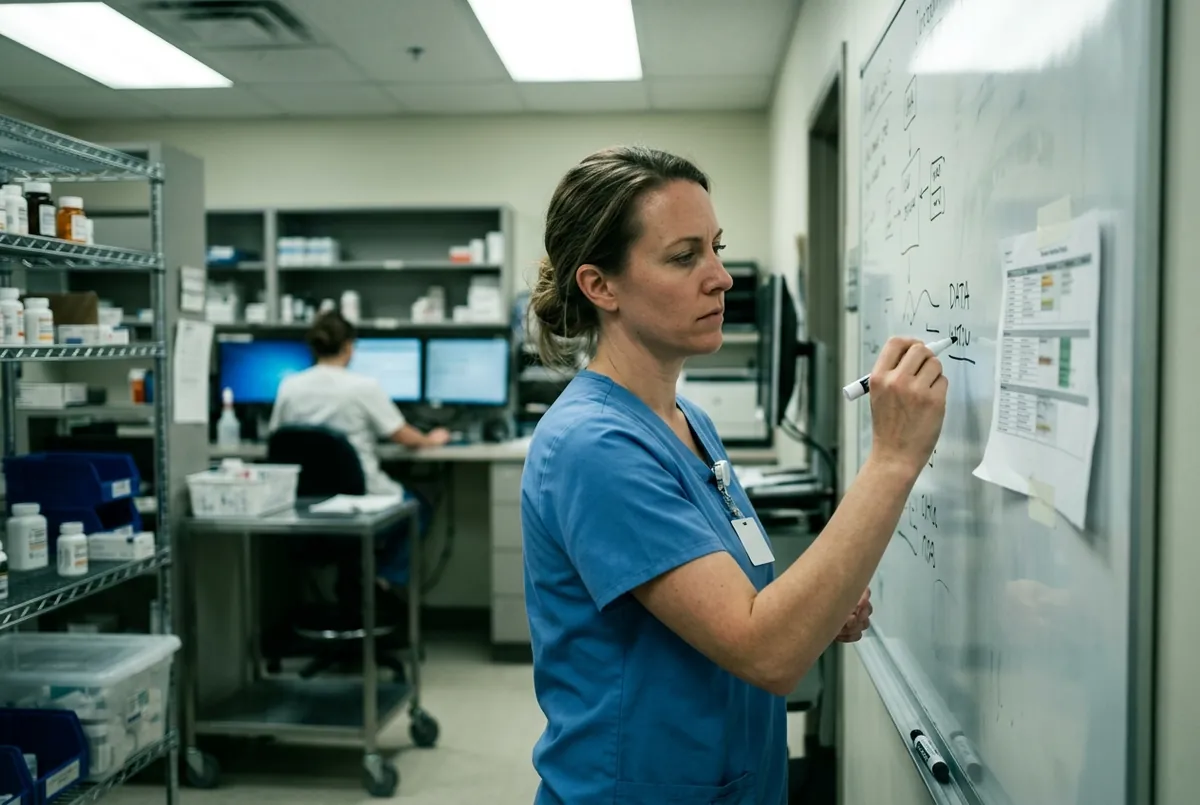
Consider the profile of a high-achieving pharmacist recently found in the depths of an industry forum. This individual was licensed, flexible on location, and willing to relocate anywhere for the right opportunity. Their technical stack was elite: a college certificate in programming and database management, proficiency in PHP, XML, and MySQL, and deep experience across Meditech modules (Pharmacy, ED, CPOE, Nursing, Lab). They had managed high-end hardware, including the Omnicell XR-1 and Pyxis systems.
Despite paying a professional to optimize their resume and LinkedIn profile, they could not secure a single interview.
This scenario represents a fundamental misunderstanding of the pharmacy informatics hiring funnel. To a Career Strategist, this isn't just a string of bad luck; it is a structural rejection. On paper, this candidate is a technical powerhouse. In practice, they are hitting an invisible wall because they are attempting to solve a networking and credentialing problem with more coding languages. To break through, you must stop polishing your resume and start understanding the institutional logic of the hospital pharmacy department.
Takeaway 1: The Credential You Can't Buy
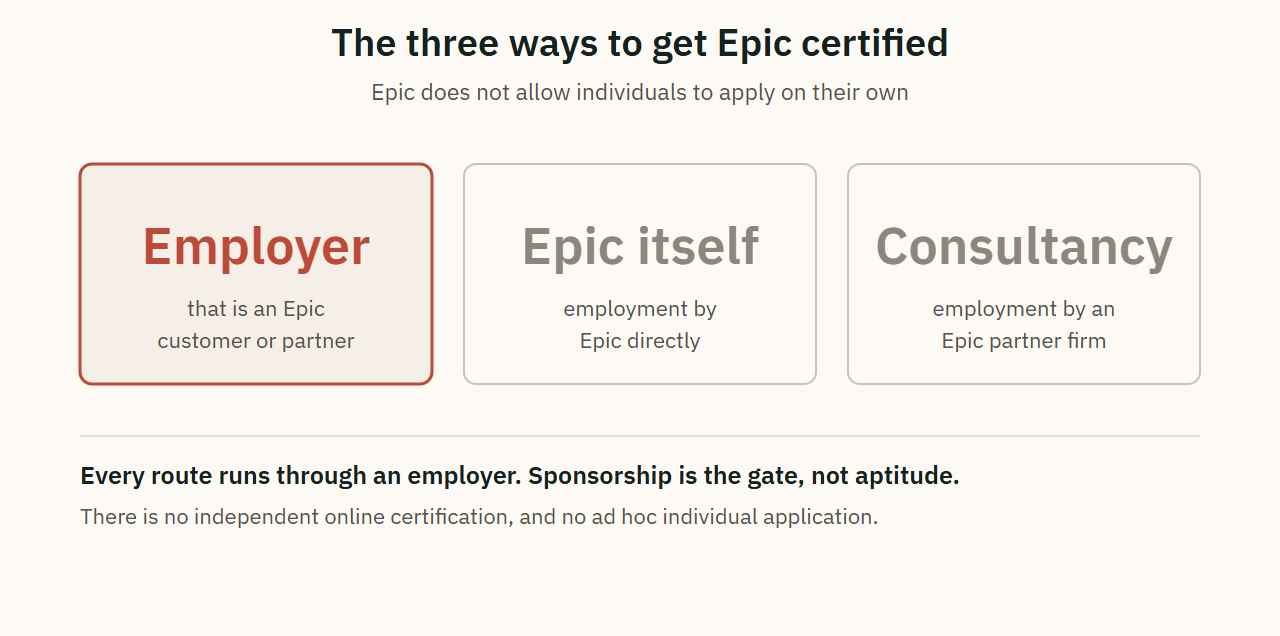
The most aggressive gatekeeper in the industry is the vendor-specific certification, most notably Epic Willow or Beacon. For many HR departments, this is a non-negotiable binary filter. If you don't have it, your application is dead on arrival. The "trap" is that you cannot simply go out and buy this qualification.
Analysis: This shifts the "barrier to entry" from a personal qualification to an internal organizational negotiation. From a strategist's perspective, the certification is not a degree; it is an employer-granted budget line. When you apply "cold" from the outside, you are asking a stranger to gamble a significant portion of their training budget on an unproven asset.
Takeaway 2: Informatics is About "Seams," Not Software Development
A recurring error among technical pharmacists is the belief that they need to be software developers. In reality, the software is already built by multibillion-dollar vendors. The informatics pharmacist's role is the management of the "seams", the vulnerable points where the EHR, the billing system, and the automated dispensing cabinets (ADCs) must exchange data.
The work is configuration and integration, not coding from scratch. This includes tuning clinical decision support (CDS) alerts, building order sets, and ensuring the formulary maps correctly across disparate systems.
Analysis: This is why clinical judgment is the primary value driver, while technical skill is the Multiplier Effect. A pharmacist who knows SQL but doesn't understand nursing workflows on a med-surg unit is a liability. However, once you are on the "inside," technical skills like SQL become an unfair advantage. Most informatics pharmacists cannot query a database directly; if you can, you become an unusually valuable asset capable of solving problems that vendor support cannot reach.
Takeaway 3: The "Inside Track" is the Only Fast Track
Applying to informatics roles from the outside is the highest-friction path possible. Because of the "sponsorship rule," the credentialing filter acts as an automated rejection system for anyone not already in the vendor ecosystem.
The most efficient route is leveraging your status as an internal asset. A hospital department is far more likely to sponsor someone they already trust and who already understands the local institutional quirks.
Analysis: This is a matter of Risk Mitigation. A hospital isn't just paying for your certificate; they are paying for the 6-12 months of "on-boarding friction" it takes for a stranger to learn their specific local build. An internal candidate has already cleared the hurdle of cultural and operational fit. For a CFO, justifying a budget line for a known, high-performing internal pharmacist is an easy win; doing so for an external unknown is a career risk.
Takeaway 4: The 6 "Under-Resourced" Projects You Can Join Today
You do not need a title change to build a portfolio of proof. Every hospital pharmacy has safety-critical workstreams that are chronically under-resourced. Volunteering for these creates the leverage necessary to demand sponsorship.
| Project | What You Do | Why It Is a Strategic Opportunity |
|---|---|---|
| Order Set Build & Review | Write and revise the clinical protocols prescribers use. | High clinical stakes; departments are almost always behind on these reviews. |
| Alert and CDS Tuning | Analyze and cut redundant alerts to reduce "noise." | Alert fatigue is a primary safety metric; leadership values anyone who reduces it. |
| Smart Pump Library | Maintain drug entries and safety guardrails for infusion pumps. | High-alert content that requires meticulous clinical oversight; often seen as "tedious." |
| ADC Optimization | Configure cabinet stocking, override lists, and pocket configurations. | Directly impacts nursing satisfaction and diversion detection (an AI priority). |
| Downtime Procedures | Refine paper-based processes for EHR outages. | Required for accreditation but rarely updated; provides a deep view of system logic. |
| BCMA Scanning Rates | Investigate why barcode scanning fails on specific units. | These rates are reported to the C-suite, yet the root causes are often "unowned." |
Analysis: Participating in these projects renders a resume rewrite unnecessary. It transforms you from a "pharmacist interested in tech" into an "unfunded informatics asset" that the department cannot afford to lose. This is how you move from "asking" for a job to "formalizing" a role you are already performing.
Takeaway 5: The "Free" Reality Check (Two Key Questions)
Before you invest your human capital into a specific site, you must perform a diagnostic of the environment. Ask your manager these two questions:
-
"Which EHR do we use, and has the department ever sponsored a pharmacist through vendor certification?"
-
Strategy: If the answer is "no," there is no precedent for the investment, and you may need to move to a more progressive organization that views staff development as a strategic priority.
"Who owns the pump library and the order set build here?"
- Strategy: This identifies your future mentor or the overwhelmed peer who is currently doing informatics work with no protected time. They are likely underwater and will view your offer to help as a massive relief, giving you immediate access to the "seams" of the system.
Analysis: The answers to these questions provide more ROI than 100 job applications. They reveal whether a path to certification actually exists at your current location or if you are fighting a battle that has already been lost.
Conclusion: Moving Beyond the Application Portal
The era of "applying your way in" is over. The "Invisible Wall" is designed to filter for stability and vendor-alignment, not technical curiosity. Success in the current market requires a shift from passive applying to active doing.
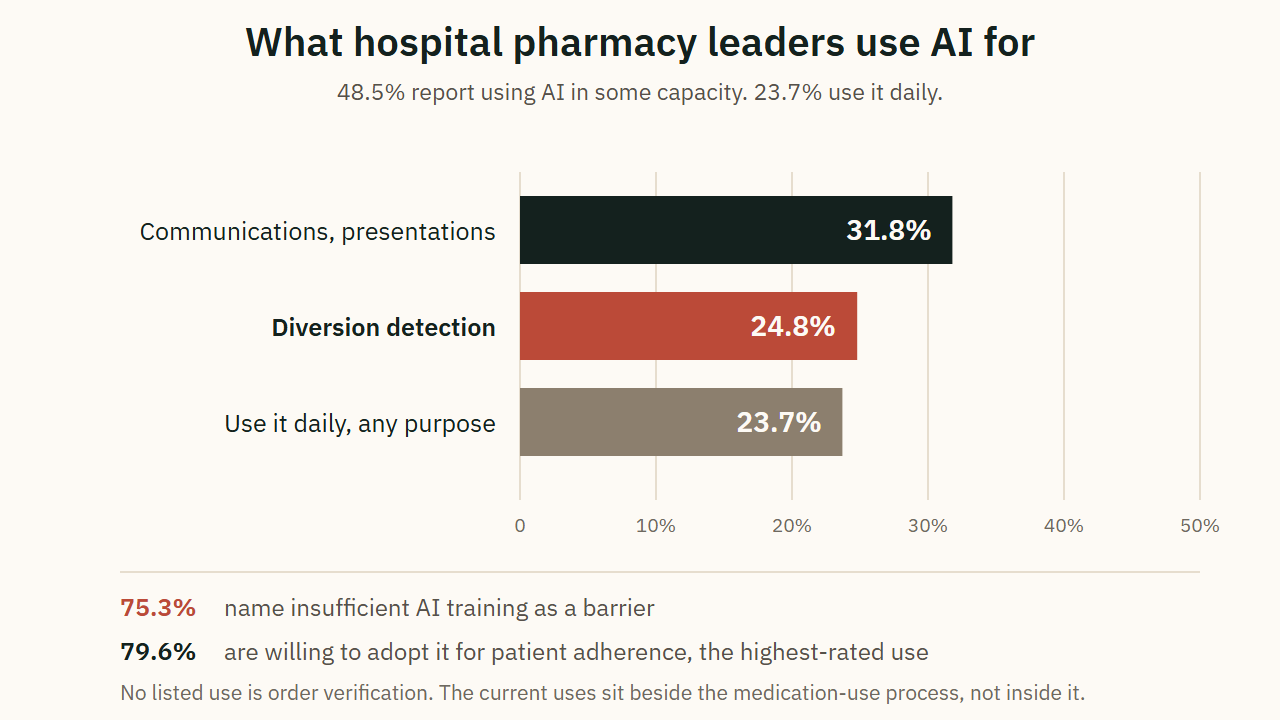
This transition is more critical than ever. With 48.5% of pharmacy leaders already adopting AI, particularly for diversion detection (24.8%) and data synthesis, the complexity of the "seams" between systems is expanding. As technology matures, the need for pharmacists who can navigate the friction between clinical reality and software configuration will only grow.
Which of the six projects listed above will you investigate during your next shift? Your answer to that question is the first true step of your informatics career.
Related
- The original thread on Student Doctor Network
- ASHP on careers in informatics
- openFDA, if you want a real dataset to practice on
- Running the Pharmacy, on where these systems sit in the operations picture
- Your First Year as a Hospital Pharmacist, if the inside track means getting into a hospital first