The $90,000 Reality Check: Is a Mid-Career Residency Actually Worth It?
The "Six-Year Itch" in Pharmacy
It is a familiar, heavy milestone in the profession: the six-year mark. By now, the "new grad" energy has been ground down by the relentless MTM treadmill, shifting DIR fee structures, and the suffocating pressure of quota-driven metrics. You feel stuck. The clinical knowledge you once took pride in feels like it's evaporating behind a retail counter, replaced by the muscle memory of high-volume verification.
When you hit this wall, the PGY1 residency often looks like the only "golden ticket" out. But it is worth asking: Is returning to residency a viable bridge to clinical practice, or is it an expensive exit strategy that might not even work? We need to look past the residency marketing and examine the hard data of the 2026 cycle to see if the "Match" is actually designed for someone in your shoes.
The "Match Gap" Illusion: It's Easier to Get In, But Not for You
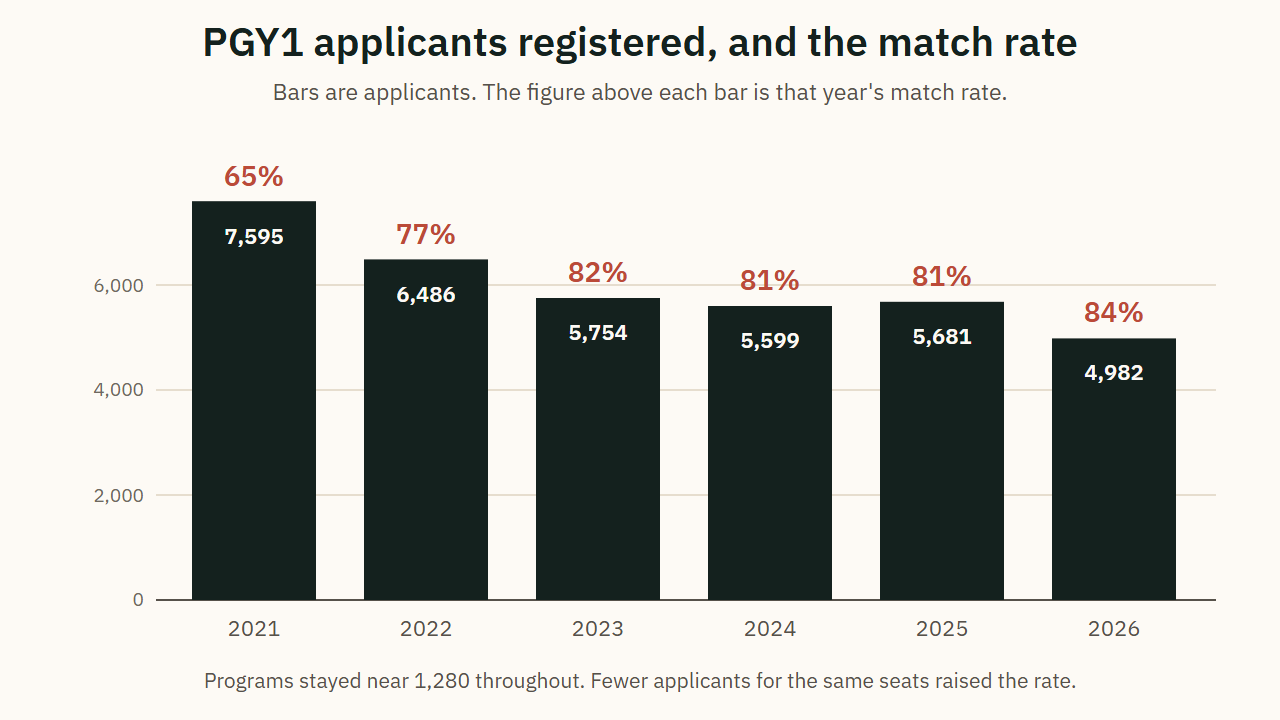
If you look at the headlines, the residency market has never been more favorable. Between 2021 and 2026, the overall PGY1 match rate skyrocketed from 65% to 84%. In that same window, the number of unfilled positions jumping from 13 to 268 suggests a surplus of opportunity.
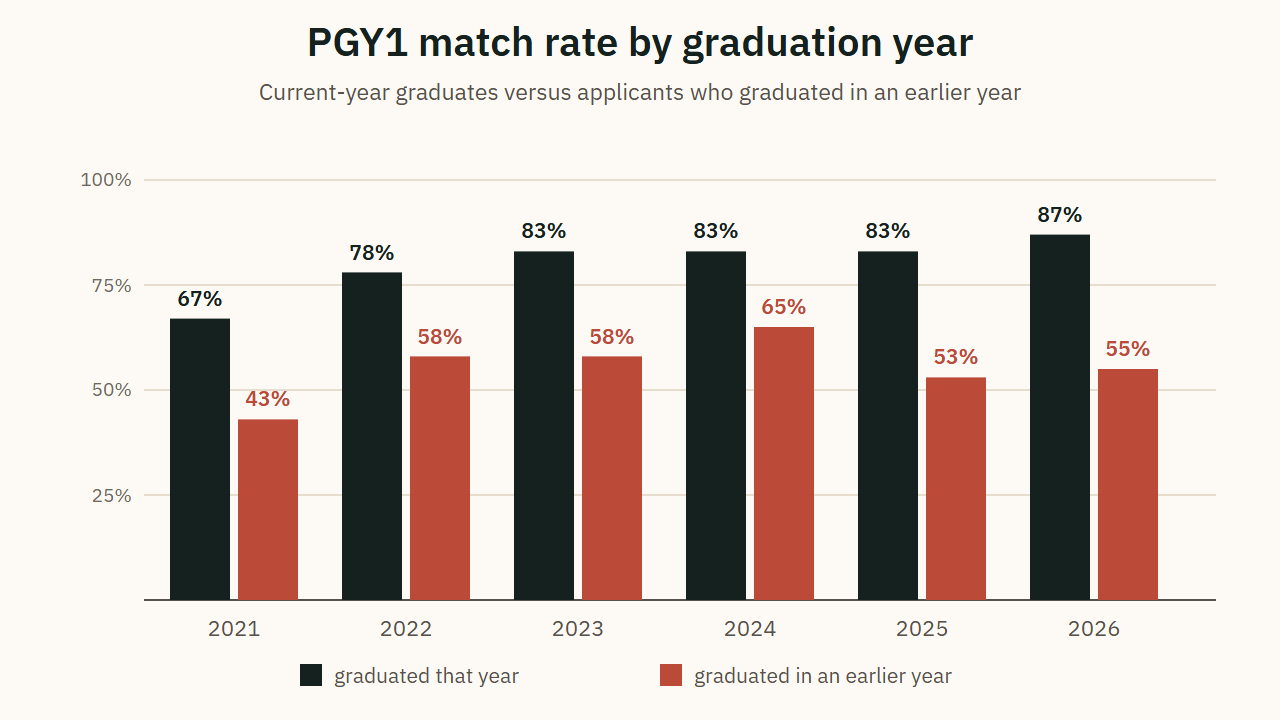
The data hides a "Match Gap" that specifically targets older graduates. While the 2026 market was a windfall for P4 students (who matched at an 87% clip), earlier graduates, like you, saw a match rate of only 55%. This 32-point chasm has remained stubbornly wide for half a decade. Remember, that 55% represents "self-selected" candidates who felt confident enough to pay application fees and travel for interviews. For the average retail pharmacist six years out, the statistical reality is likely even harsher.
The Interview Truth: It's Not Your Age, It's Your Knowledge
When mid-career pharmacists fail to match, the common refrain is a suspicion of age bias or a "jaded" retail attitude. The reality reported by Residency Program Directors (RPDs) is much more objective: knowledge decay.
The primary failure mode in selection committees is "clinical knowledge under questioning." While a P4 is "fresh" from an acute care rotation, a retail pharmacist has spent half a decade focused on operations and dispensing. Without active reasoning through vancomycin kinetics or interpreting complex culture and sensitivity reports, the gap becomes "plainly evident" in the room. As one program director noted:
The Strategist's Insight: This is a problem you fix before you apply, not by applying. Attempting to match without first spending a "buffer year" in a rural or operations-heavy hospital role to remediate your clinical reasoning is, quite frankly, a waste of your application fees.
The Hidden Price Tag: $90,000 and the Burden of Year Six
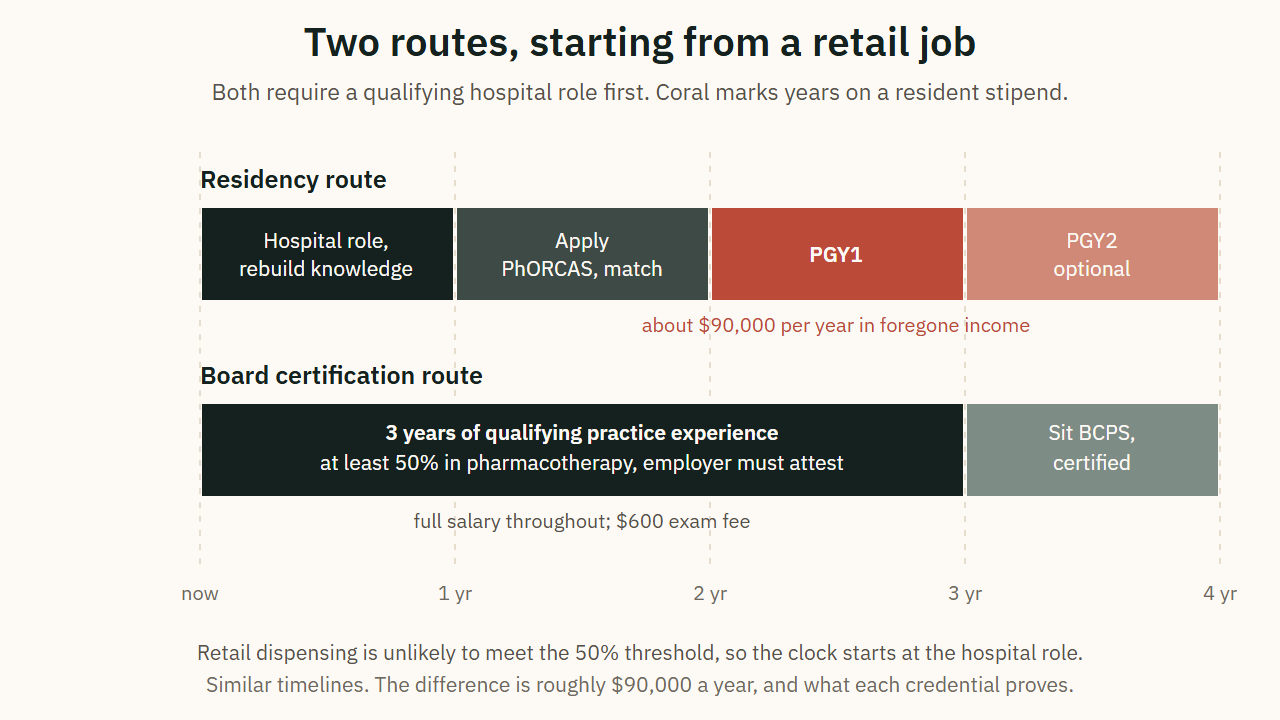
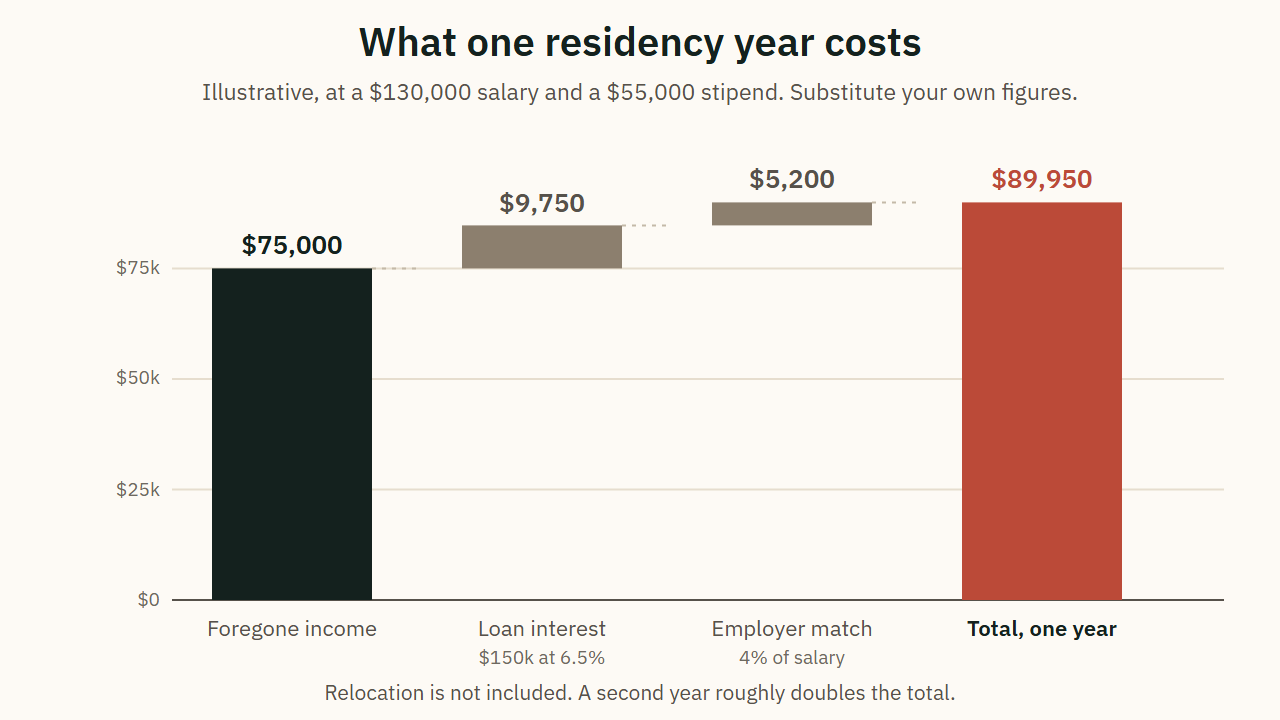
As an experienced pharmacist, your "cost of a year" is vastly different from that of a student. You have more to lose. Based on current market midpoints ($130,000 for staff vs. $55,000 for a resident), the "all-in" cost of a single residency year is roughly $90,000:
-
$75,000 in foregone gross income.
-
$9,750 in accrued loan interest (assuming a $150,000 balance at 6.5%) that is no longer being principal-reduced.
-
$5,200 in lost employer retirement matches (based on a 4% match).
This is a massive financial hit, and if you are eyeing a specialty that requires a PGY2, you are looking at a $180,000 investment before relocation costs. At year six, this isn't just "student debt", it's the cost of a mortgage, childcare, and a decade of lost compound interest.
The BCPS Trap: Why You Likely Aren't Eligible (Yet)
Many pharmacists view Board Certification (BCPS) as a faster, cheaper alternative to residency. However, the Board of Pharmacy Specialties (BPS) has strict "gatekeeper" requirements. To sit for the exam via the practice pathway, you must prove:
-
Three years of practice experience within the past seven years.
-
A 50% pharmacotherapy threshold, meaning at least half of your time is spent in the clinical scope defined by the BPS.
The catch: This experience must be verified by an employer attestation on company letterhead. Traditional retail dispensing rarely clears the 50% clinical threshold. Consequently, the very certification you want to use to get a clinical job often requires you to already have one. BCPS is a tool for documentation, not necessarily a tool for transition.
The Market Shift: The Door is Already Opening
The most important strategic insight I can offer is this: The door you're trying to kick down is already ajar. Between 2022 and 2024, retail pharmacy jobs plummeted by 13,000 while hospital roles grew by 11,000. The "hospital share" of the profession is expanding, and they are desperate for bodies.
For those willing to relocate, the job market is a "faster instrument" than a residency. Rural and smaller hospitals are struggling to maintain 24-hour coverage and are often forced to hire "full scope of practice" pharmacists without residency training. These roles allow you to rebuild your clinical knowledge and earn a full salary simultaneously. Moving for a staff position at a short-staffed hospital is a strategic move that pays you to learn, rather than charging you $90,000 for the privilege.
Conclusion: The Relocation Litmus Test
If you are considering a mid-career residency, you must perform an honest "Strategic Order of Operations" check. Start with the relocation litmus test: Are you willing to move anywhere in the country for a residency?
If the answer is yes, then apply that same geographic radius to hospital job postings first. Commit to a dedicated search for three months before you even look at a residency application. If you can find a rural or operations role that gets you into a hospital setting, you solve your "knowledge decay" and "letter of recommendation" problems while keeping your $90,000.
Ultimately, you must ask yourself: Are you chasing a specific, specialized clinical practice, or are you just trying to leave the retail grind? If it's the latter, the market is already offering you a way out. Don't pay $90,000 to solve a problem that a change of zip code could fix for free.
Related
- The original thread on Student Doctor Network
- ASHP Match statistics
- BPS fees and deadlines
- ASHP Resident Matching Program statistics, the source of every match figure above
- Your First Year as a Hospital Pharmacist, on the practice knowledge a residency front-loads
- Running the Clinical Program, on the clinical manager route