Beyond the Hype: What AI in Pharmacy Actually Looks Like in 2026
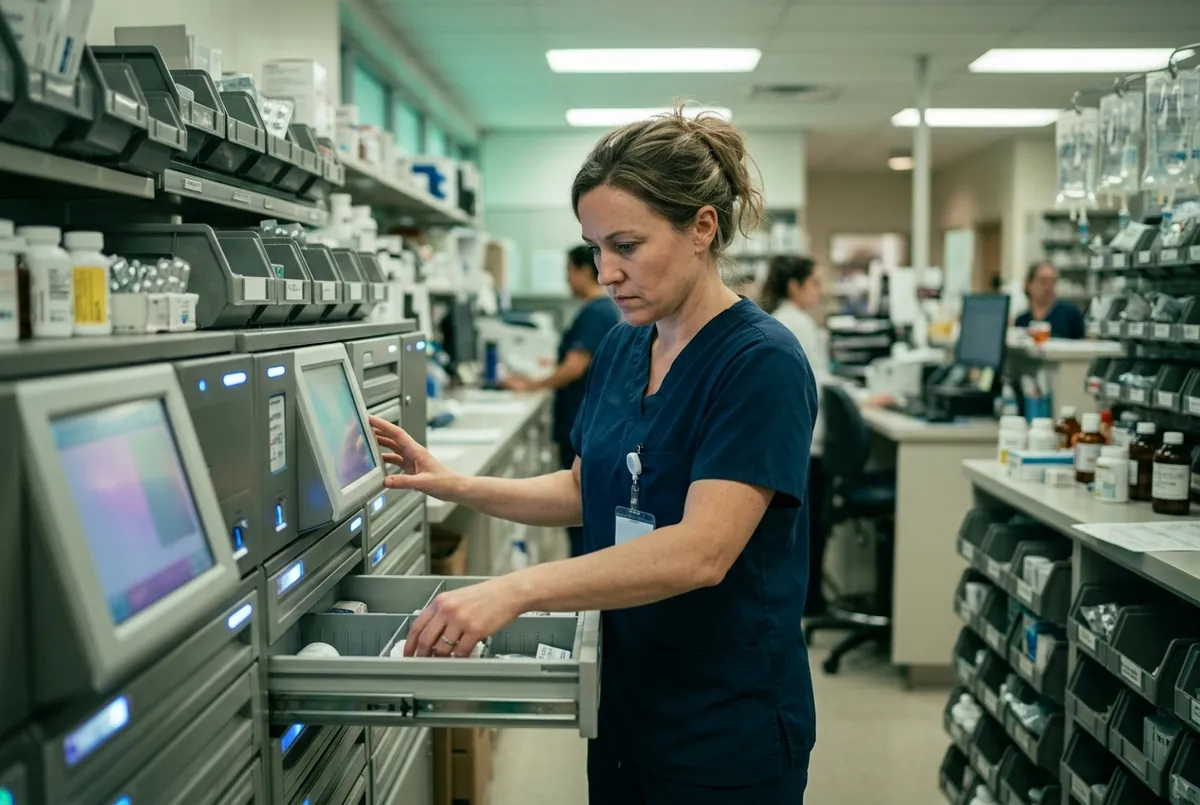
For the past few years, the pharmacy profession has been drowned out by grand, sweeping predictions of an "AI revolution." We have been told that Artificial Intelligence would fundamentally rewrite the DNA of clinical practice, yet the gap between high-level discourse and the daily reality of the verification queue or the clinic remains stark. As we move through 2026, the question is no longer whether AI is coming, it is here. The real challenge is recognizing what it actually looks like in practice.
The "AI revolution" isn't a singular, explosive event; it is a series of quiet integrations into our existing workflows. Most pharmacists are already using these tools, though perhaps not for the futuristic clinical interventions the headlines promised. The goal of this column is to cut through the abstract speculation and distill the most impactful takeaways from current adoption data and the first wave of pharmacy-specific studies. If we are to lead the digital health transition, we must separate the useful tools from the shiny distractions.
Adoption is Higher (and Duller) Than You Think
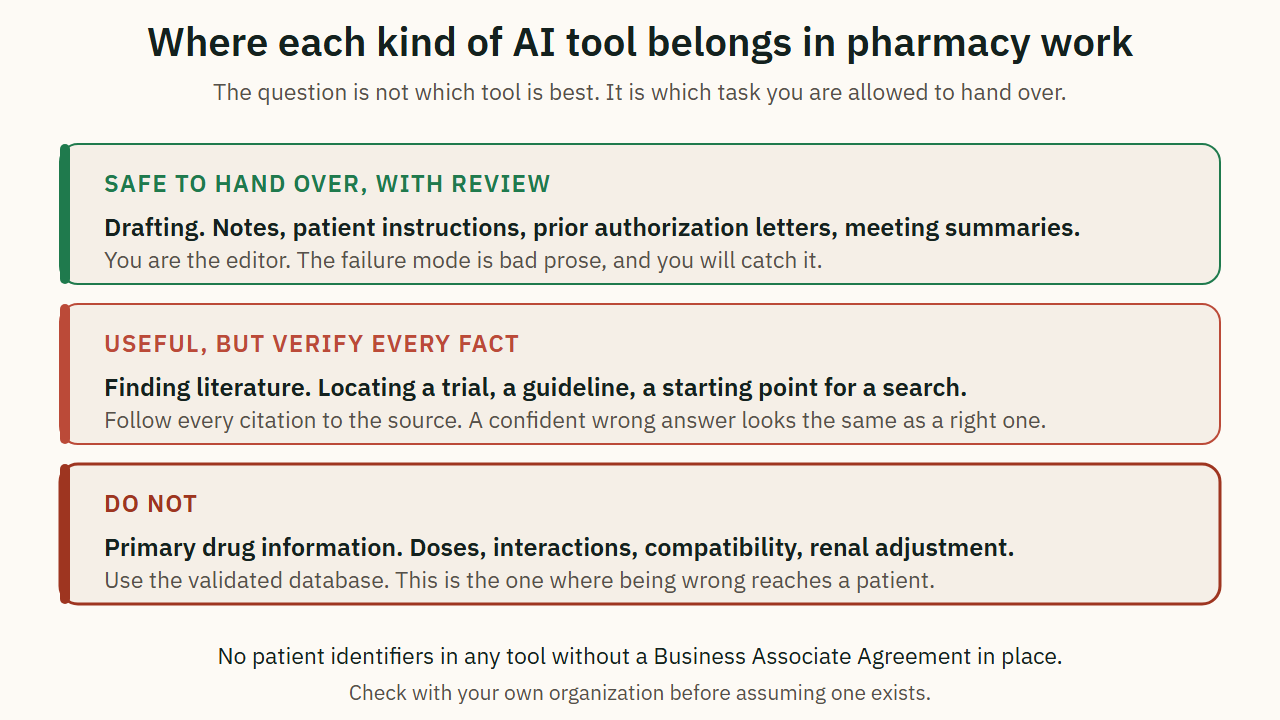
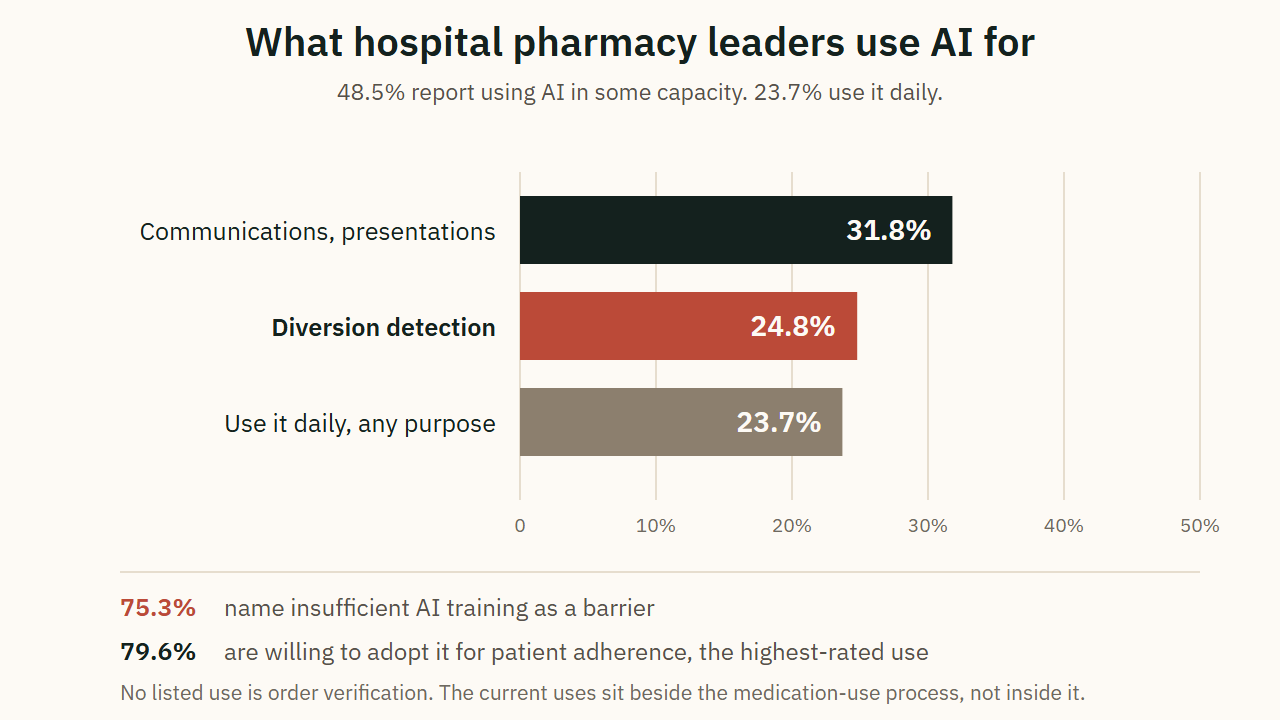
If you feel like you are the only one not using AI daily, the data suggests otherwise. Current 2026 reporting on hospital pharmacy adoption reveals that AI is no longer a niche curiosity; it is a coin-flip reality. Currently, 48.5% of hospital pharmacy leaders report using AI in some capacity, with 23.7% utilizing it daily.
However, the nature of this adoption is likely "duller" than many expected, and that is exactly the point. Rather than replacing clinical judgment, the most successful deployments are administrative and operational. Top reported uses include:
-
Diversion detection (24.8%): Using pattern recognition to scan dispensing records for anomalies that human oversight might miss.
-
Data synthesis: Pulling information across disparate technology vendors and systems that traditionally refuse to talk to one another.
Notice what is missing: order verification and dose checking. These tools are being deployed alongside the medication-use process rather than inside it. This is a sign of technological maturity. We are using AI to handle the "data exhaust" of our departments, leaving the clinical safety checks to the licensed professionals.
The "86-Second" Reality of Ambient Documentation
Ambient documentation has become the first AI application to produce credible, published pharmacy-specific evidence. The Olson AW et al. study evaluated 41 medication therapy disease management pharmacists across 33 ambulatory clinics. When given licenses for an ambient tool, the results were both grounded and revealing: the tool was used for 65% of eligible encounters, and the average time spent on notes fell by 86 seconds.
While 86 seconds is a pedestrian figure compared to the massive efficiency gains often promised in marketing materials, we must be careful with the context.
A critical disclaimer: This 86-second time save is specific to ambulatory medication management. It cannot be assumed to transfer to a hospital verification queue or a high-volume retail setting where the workflow is fundamentally different.
Despite the modest time save, the 65% voluntary utilization rate is the real story. Pharmacists used the tool because it reduced the documentation burden and allowed for "undivided attention" during patient encounters.
If anyone sells you AI as a silver bullet for the burnout crisis, they are ahead of the evidence. The value lies in the quality of the encounter, not necessarily the speed of the shift.
Sort the Task, Not the Tool: The Three Tiers
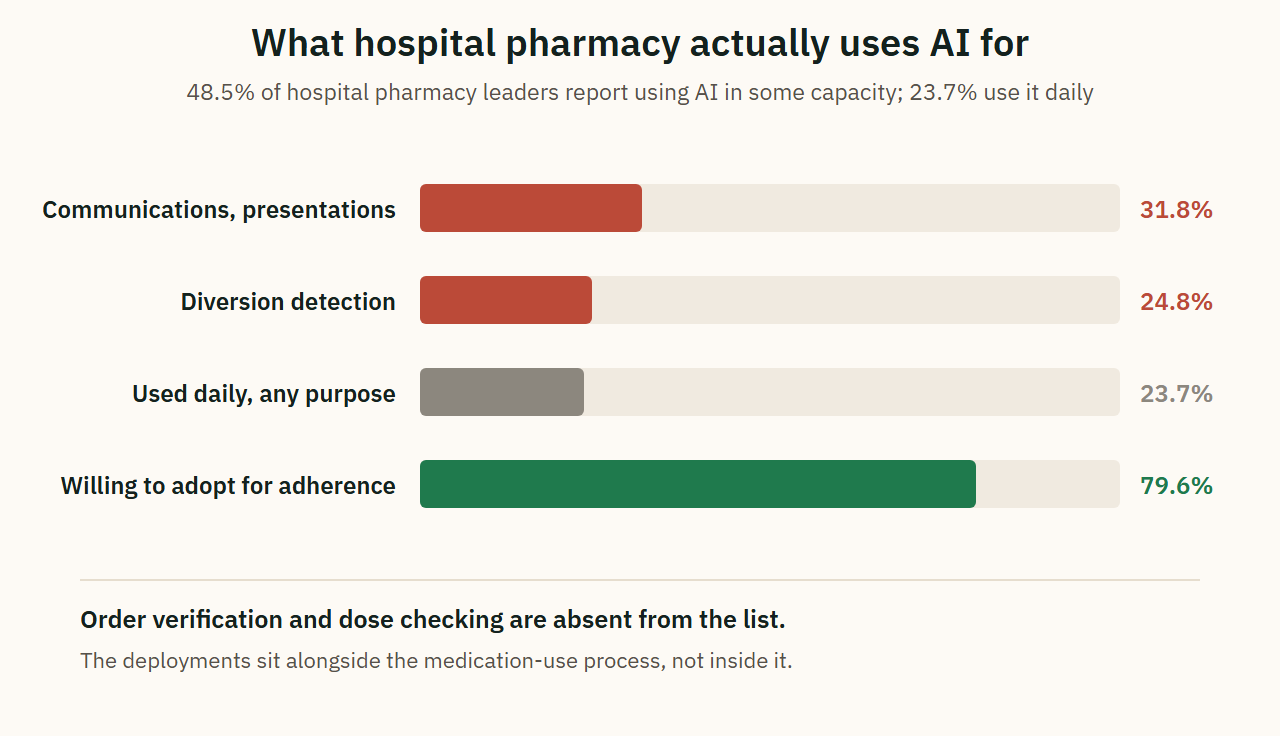
The most important skill for a modern practitioner is not knowing how to "prompt" a machine, but knowing which tasks are safe to delegate. We must sort our tasks into three tiers based on the risk of patient harm.
| Tier | Why it matters |
|---|---|
| Tier 1 | Drafting (Safe to Proceed). This includes drafting patient instructions, prior authorization letters, or meeting summaries. Here, you act as the editor. The failure mode is simply bad prose, which any pharmacist will easily catch. This is where the majority of actual time is saved. |
| Tier 2 | Literature Finding (Verify Everything). AI can locate trials or guidelines, but you must follow a strict "verify every citation" rule. A confident wrong answer looks identical to a right one. More importantly, the citation being real does not mean it says what the summary claims, AI is notorious for "hallucinating context" where it links a real paper to a conclusion the authors never made. |
| Tier 3 | Primary Drug Information (Do Not Use). This includes doses, interactions, compatibility, and renal adjustments. Do not use AI for these. These tasks belong in validated clinical databases (e.g., Lexicomp, Micromedex). This is the one category where an error reaches a patient directly. |
The April 2026 Access Shift
On April 23, 2026, the accessibility landscape shifted when OpenAI launched ChatGPT for Clinicians. Free for US pharmacists verified via National Provider Identifier (NPI), the tool is specifically aimed at documentation, prior authorizations, and literature reviews.
While this makes powerful tools available to individual practitioners, it introduces a dangerous legal nuance. OpenAI offers optional HIPAA support through a Business Associate Agreement (BAA). However, a BAA being available is a marketing feature; a BAA being in place is a legal requirement. Unless your organization has signed that specific agreement, the tool is not cleared for patient data.
The best rule of thumb? Use the tool your institution already pays for. If your hospital provides an AI layer within your existing clinical reference products, use it. The vetting and data agreements are already done, protecting both you and your patients.
The "Golden Rule" of Responsibility
The psychological trap of AI is its fluency. Because it sounds like a human colleague, it is easy to trust. To stay safe, you must adhere to two non-negotiable rules:
Rule 1: No patient identifiers without a signed agreement. This is non-negotiable. "I removed the name" is a fallacy, de-identifying a prompt is insufficient to meet modern data privacy standards without an institutional BAA. If your informatics or compliance contact cannot confirm an agreement is signed, the answer is "no."
Rule 2: Absolute Accountability. You are the licensed professional; the machine is not.
A recommendation you didn't verify or a note you didn't carefully read is still your legal and professional responsibility once you sign off. The fluency of the output is a mask; never let it lure you into a false sense of security.
Closing: The One Thing to Do First
The technology surrounding AI will continue to move at a breakneck pace, but the "tiers" of clinical safety do not change. Your success in this new era depends on your ability to act as a rigorous editor and a skeptical clinical lead.
The final action: Before you enter a single prompt tomorrow, find out exactly what your organization permits regarding patient data. Contact your informatics or compliance lead and get the answer in writing.
As you look at your task list, ask yourself: Am I sorting these tasks by the level of risk they pose to the patient, or simply by the convenience the tool offers? In 2026, the difference between an innovator and a liability is how well you answer that question.
Related
- What ambient AI documentation did for 41 pharmacists
- Will AI replace pharmacists? Start with what departments actually use it for
- How to get into pharmacy informatics from the job you already have
- OpenAI on ChatGPT for Clinicians
- Running the Pharmacy, on evaluating a tool before the department depends on it