The "Rehearsed Answer" Trap: Why Your Clinical Interview Preparation is Failing (and How to Fix It)

I have sat across the table from dozens of candidates who look perfect on paper. They have mastered the "STAR" method, their handshakes are firm, and they have a polished, three-minute anecdote for every "Tell me about a time..." question in the book. On the surface, they are the ideal applicants. Yet, ten minutes after they leave the room, the panel is already moving on to the next name.
If it isn't your attitude and it isn't your polish, what is actually failing you? Most preparation focuses on "performing" competence rather than demonstrating it. As an insider who has directed clinical programs and sat on both sides of the hiring table, I can tell you the reality is often uncomfortable: candidates are busy perfecting a script while hiring managers are looking for a thinker.
Knowledge, Not Attitude, is the Primary Filter
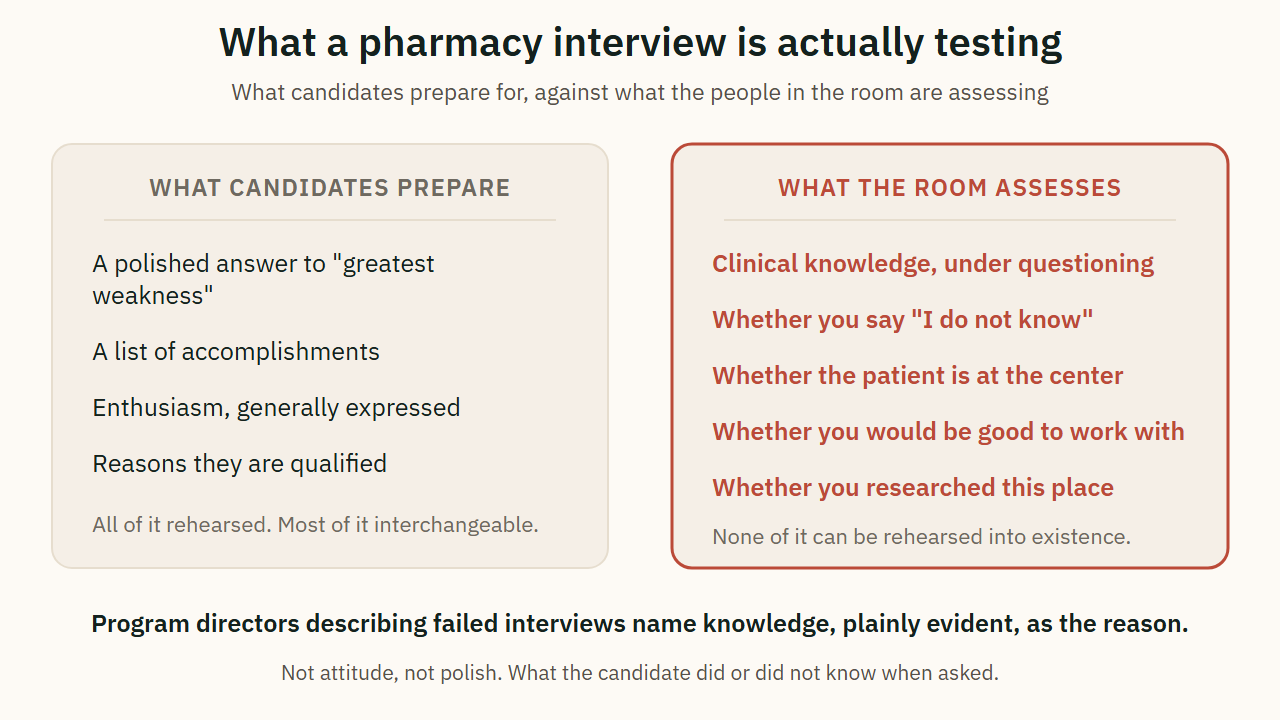
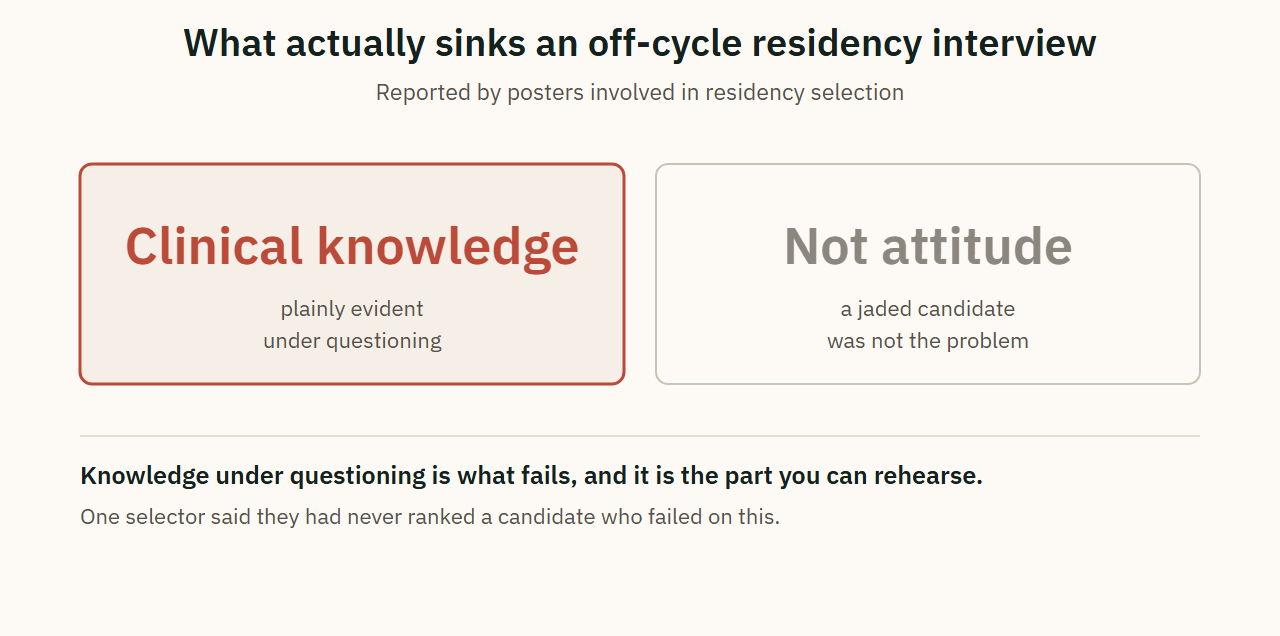
There is a persistent myth among experienced or "off-cycle" pharmacy candidates, those returning to clinical practice or applying for residency years after graduation, that they are passed over because of a "jaded attitude." The data tells a different story. When residency program directors were asked why these candidates struggle, they didn't cite personality; they cited a lack of clinical reasoning that was "plainly evident in the room."
The "reasoning out loud" required in a clinical interview is a high-level skill that can drift if not used daily. If you have been out of a clinical setting or working in a narrow specialty, the fix is not a better "story" about why you want the role. The uncomfortable truth is that rebuilding the ability to talk through a complex patient case takes months, not an evening of reading.
Why Rehearsed Answers Are Actively Harmful
When you lean on rehearsed answers, you fall into the "interchangeability trap." You sound like every other candidate, and in a competitive field, being interchangeable is the quickest path to being forgotten. Scripts are rigid; they cannot "rehearse into existence" the ability to navigate an incomplete clinical picture.
In the interview room, there is a fundamental disconnect between what you think is being measured and what we are actually looking for:
-
What candidates think we are assessing: Scripted competence and a flawless, textbook-correct presentation.
-
What we are actually assessing: Clinical reasoning, honesty about the edges of your knowledge, and "workability" (whether we can stand to work with you for the next five years).
The Six "Invisible" Weights of a Hiring Manager
Hiring managers weigh six specific criteria that never appear in a job posting. If you understand these, you can align your preparation with the "unspoken" needs of the department.
Potential for Growth I am not just looking at what you know today; I am assessing if you will be better a year from now. A candidate who can describe a specific new skill they recently learned, and the exact process they used to learn it, demonstrates growth potential far more effectively than someone who simply claims to be a "lifelong learner."
Critical Thinking Clinical questions in an interview are rarely about testing a single fact. We are testing your logic and your flexibility. Given an incomplete picture, do you reach for a memorized answer, or do you reason toward a next step? Crucially, we are looking for what specific information would change your mind as the patient's clinical picture evolves.
Patient-Centricity There is a version of pharmacy practice that is "textbook-correct" and a version that is "task-oriented", getting things off your plate. Neither is the job. The answer that wins me over describes what the patient specifically needed, prioritizing the person over the process.
Integrity This is weighted heavily and assessed indirectly. I am looking for internal consistency, does your account of your past work actually hold together? Furthermore, admitting a knowledge gap is a "positive signal." Overstating your expertise is what costs you the role, because it invites a clinical check that you will eventually fail.
Contribution to the Whole I need to know that you want the department and the organization to succeed, not just your individual shift. The absence of this trait is a serious negative signal, often outweighing a lack of specific clinical experience.
Workability Pharmacy departments are small ecosystems where people stay for years. Consequently, being pleasant to work with is a core requirement, not a tiebreaker. No amount of clinical brilliance can compensate for a candidate who appears difficult to collaborate with.
You Have More Leverage Than You Think
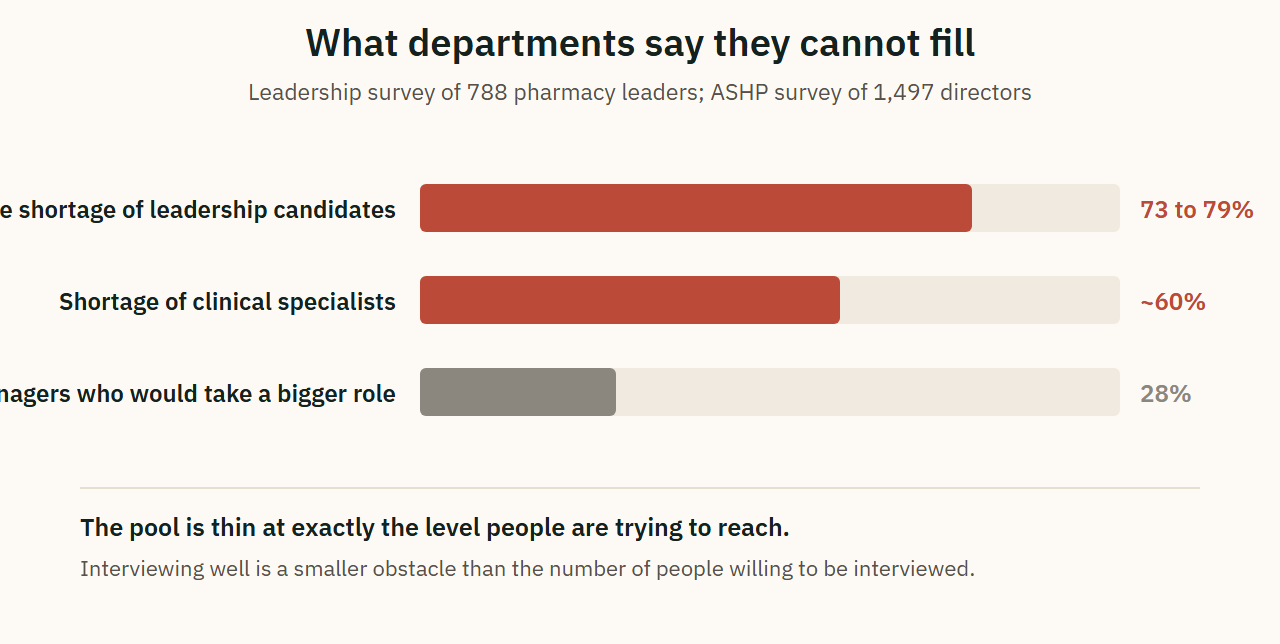
It is easy to walk into an interview feeling like a "supplicant" asking for a favor. However, the current pharmacy market is in your favor. According to AJHP and ASHP data, between 73% and 79% of pharmacy leaders report a severe shortage of candidates for leadership roles, and 60% of directors cannot fill clinical specialist positions.
When a department invites you to interview, they have a problem they are desperate to solve. This means the interview is more often yours to lose than to win. Recognizing this shift in posture, from someone asking for a job to someone offering a solution, changes your presence in the room.
Three Questions That Flip the Script
The questions you ask reveal more about your level of thinking than the answers you give. Use these three to evaluate the manager while they evaluate you:
"What is this department being asked to do over the next two years?"
- Why: This surfaces the "department mandate." It tells you what the job actually is, regardless of the generic description in the posting.
"What happened to the last person in this role?"
- Why: Whether they were promoted, left, or the role is brand new, the answer provides context on the culture and the trajectory of the position.
"What would make you glad you hired me, a year from now?"
- Why: This forces the manager to reveal their real, unwritten criteria for success. It also tells you whether they have actually thought about the role's purpose at all.
Be Interesting, Not Just Impressive
Being memorable is not a trick; it is the result of having said something true and specific. Most candidates try to be "impressive" by adhering to a sanitized, textbook version of a pharmacist.
The more effective approach is transparency. If you have a gap, such as a lack of management experience, be steady and plain about it. Admitting a limitation shows more confidence and integrity than trying to bluff your way through it. Staying "steady and plain" about what you don't know makes your actual strengths far more believable.
Conclusion: The "Reasoning Out Loud" Challenge
Effective preparation is not about writing a better script; it is about refining your clinical reasoning and performing deep organizational research. If you can speak specifically about why you want to work for a particular hospital, you distinguish yourself from the crowd of interchangeable applicants.
To test your readiness, I challenge you to the "Reasoning Out Loud" Challenge: Pick a service line the role covers and practice talking through a typical patient case out loud to a colleague or a mirror. Detail what you would check, what you would recommend, and, this is the differentiator, what specific information would change your mind.
If you had to reason through a complex case in front of a panel right now, would you be showing them a script, or a thinker?
Related
- Speaking up when you are the quiet one
- What actually gets a hospital pharmacist promoted
- Going back for a residency six years after graduating
- Should you negotiate salary in hospital pharmacy?
- Your First Year as a Hospital Pharmacist, on the clinical reasoning the interview is testing